

By Josh Maixner & Jeff Pearson
Reviewed and updated March 2026
CBD, short for cannabidiol, is a naturally occurring compound found in the cannabis plant and widely studied for its potential wellness applications. Unlike THC, CBD does not produce intoxication. Instead, researchers are studying how CBD interacts with the body’s endocannabinoid system (ECS), a biological network that helps regulate processes such as sleep, mood, inflammation, and immune response.1
Interest in CBD has grown significantly over the past decade among consumers, wellness practitioners, and researchers. Today it is commonly found in wellness clinics, pharmacies, and health-focused retail environments, alongside a growing body of scientific research.
For many people asking “what is CBD?”, the answer begins with understanding how cannabinoids interact with the body’s endocannabinoid system. This guide explains what CBD is, how it works in the body, and what current research suggests about its potential role in wellness.
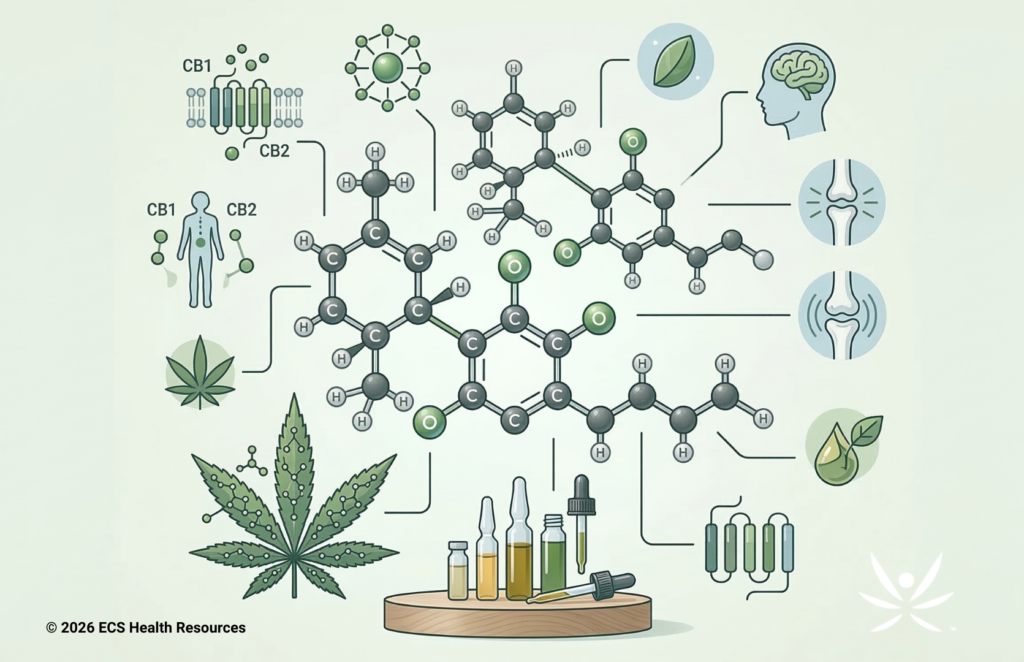
Diagram showing cannabidiol molecule, cannabis plant, and CB1 CB2 receptors in the endocannabinoid system.
CBD Quick Summary
- CBD is a non-intoxicating cannabinoid found in cannabis.
- It interacts indirectly with the body’s endocannabinoid system (ECS).
- Researchers are studying CBD for its potential role in sleep, mood, inflammation, and stress response.
- CBD is different from THC and does not produce a “high.”
- Common formats include tinctures, capsules, topicals, and edibles.
Scientific Review Note
This article is based on publicly available scientific research related to cannabinoids and the endocannabinoid system. Sources include peer-reviewed journals, academic publications, and regulatory references listed in the bibliography at the end of this article.
The content is intended for educational purposes and reflects current research as of the most recent update.
CBD and the Cannabis Plant
CBD is a phytocannabinoid, meaning it is a cannabinoid produced by a plant.
It occurs naturally in both hemp and marijuana varieties of the Cannabis sativa plant. Most commercial CBD products are derived from hemp, which contains very low levels of THC, regulated at less than .3% in the United States.
The cannabis plant produces more than 100 known cannabinoids, including:
- THC (tetrahydrocannabinol) — responsible for marijuana’s psychoactive effects
- CBD (cannabidiol) — non-intoxicating and widely studied
- CBG (cannabigerol) — sometimes called the “mother cannabinoid”
- CBN (cannabinol) — a cannabinoid currently being studied for calming properties
Scientific interest in cannabinoids expanded significantly after researchers discovered the endocannabinoid system in the early 1990s.2
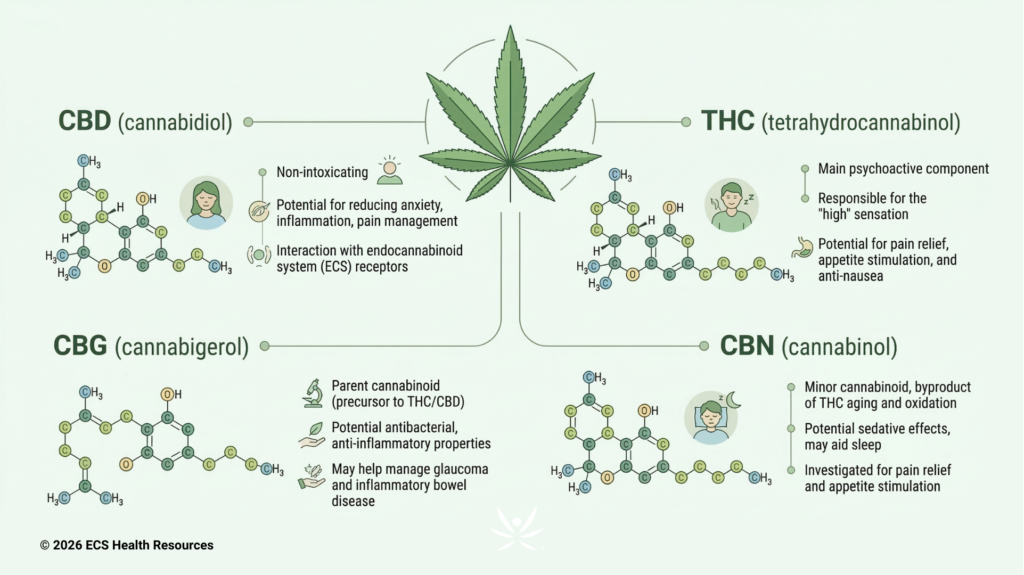
Infographic comparing CBD and THC cannabinoids and their different effects in the body.
CBD vs THC: Key Differences
While CBD and THC are both cannabinoids derived from the cannabis plant, they interact with the body’s endocannabinoid system in different ways.
THC
• binds strongly to CB1 receptors in the brain
• produces the psychoactive “high” associated with marijuana
CBD
• does not produce intoxication
• interacts more indirectly with the endocannabinoid system and has greater activity around CB2 receptors, which are found more in the body and immune system
This difference is important for many wellness consumers who want the potential benefits of cannabinoids without the intoxicating effects of THC.
Is CBD the Same as Hemp Oil?
CBD and hemp oil are often confused but are not the same thing.
CBD refers specifically to the compound cannabidiol, which is extracted from the plant, whereas hemp oil, sometimes called hemp seed oil, is pressed from the seeds and naturally contains little to no CBD.
While both come from the same plant family, they have different compositions and uses. Hemp seed oil is typically used in nutrition and skincare products, while CBD products are formulated to deliver cannabinoids that interact with the body, via numerous delivery methods such as tinctures, topicals, or edibles.
How CBD Works in the Body
To understand why CBD has attracted so much scientific interest, it helps to first understand the system it interacts with inside the body.
The Endocannabinoid System (ECS)
The ECS is a biological signaling network found throughout the human body, as well as many other animals. It helps regulate a wide range of physiological processes, including:
- Sleep
- Mood
- Appetite
- Inflammation
- Immune response
- Pain perception
The ECS consists of three primary components:
Endocannabinoids
Naturally produced molecules in the body, including anandamide and 2-AG.
Receptors
The most well-known receptors include:
- CB1 receptors —primarily located in the brain and central nervous system
- CB2 receptors — primarily found in immune cells and peripheral tissues
Enzymes
Enzymes break down endocannabinoids once their signaling role is complete.
Together these components help the body maintain homeostasis, or internal balance.3,4 Researchers believe the ECS also plays a role in helping the body adapt to internal and external stressors.
CBD appears to interact with the ECS indirectly. Rather than binding strongly to CB1 or CB2 receptors like THC, CBD may influence receptor signaling and interact with other pathways including serotonin and TRPV1 receptors.2,5,6
To learn more, read our companion guide: Exploring CBD and the Endocannabinoid System.
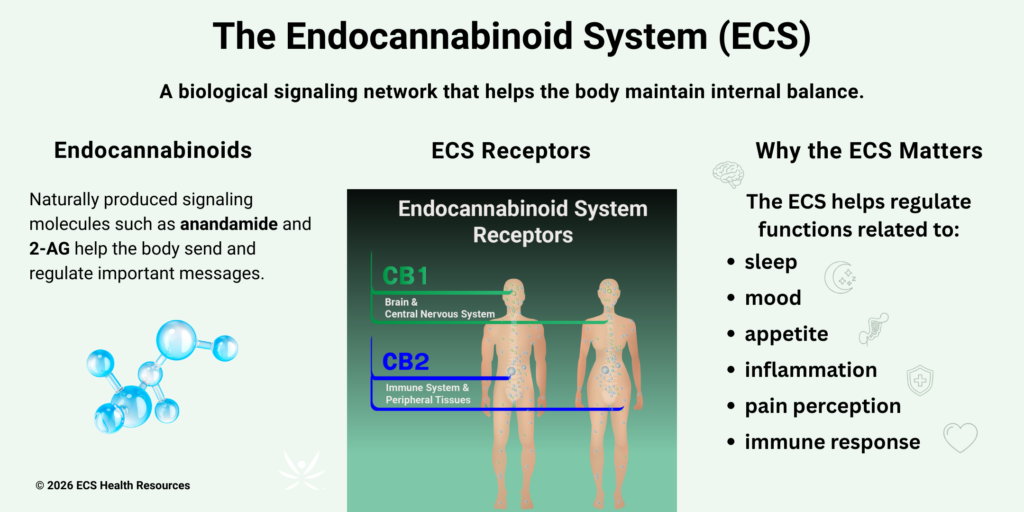
The endocannabinoid system (ECS) includes signaling molecules, CB1 and CB2 receptors, and regulatory processes that help the body maintain internal balance.
Potential Wellness Applications of CBD
Research into CBD is ongoing, and scientists continue studying how cannabinoids interact with biological signaling pathways throughout the body.
CBD products are not intended to diagnose, treat, cure, or prevent any disease, but several areas have attracted significant research attention.
Inflammation Response
Researchers are exploring how cannabinoids interact with inflammatory pathways and immune signaling.2,7
Sleep and Relaxation
Sleep quality is one of the most common reasons people explore CBD. Early research suggests CBD may support relaxation and sleep regulation.8,9
Mood and Stress Response
Researchers are also studying how CBD may influence emotional balance and the body’s response to stress through serotonin-related pathways.1,10
Localized Comfort
CBD topical products such as oils and balms are often used for localized application to muscles and joints and are of interest to wellness practitioners including chiropractors and massage therapists.5,11
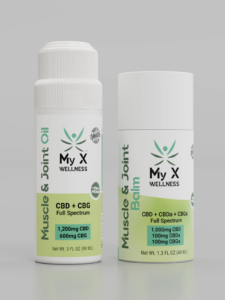
My X Wellness Muscle & Joint Oil Roll-on and Muscle & Joint Oil Balm.
Common Ways People Use CBD
CBD products are available in several formats.
Tinctures
Liquid extracts placed under the tongue for relatively fast absorption.
Capsules
Pre-measured servings similar to traditional supplements.
Topicals
Creams, balms, oils, lotions or salves applied directly to the skin.
Edibles
Products such as gummies or infused beverages.
Pet Products
Specially formulated CBD products designed for animals.
The best format depends on personal preferences, wellness goals, and guidance from a qualified professional.
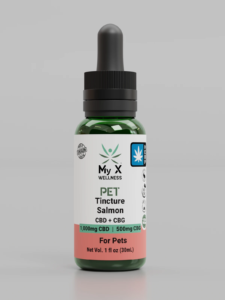
My X Wellness Pet Tincture.
Is CBD Legal?
In the United States, the 2018 Farm Bill federally legalized hemp-derived CBD products containing 0.3% THC or less, significantly expanding access to hemp-derived cannabinoids.
While this legislation significantly expanded the CBD market, state regulations may still vary. International CBD laws also differ by country.12,13,14
Safety and Considerations
CBD is generally considered well tolerated, though responses may vary.
Some individuals report mild side effects such as:
- Fatigue
- Appetite changes
- Digestive discomfort
If you are exploring CBD, consider the following:
Consult a healthcare professional
CBD may interact with certain medications. Individuals who are pregnant, nursing, or taking prescription medications should consult a healthcare professional before using cannabinoid products.
Look for third-party lab testing
Certificates of Analysis (COAs) help verify cannabinoid content, purity, and product safety. Third-party lab testing acts as the “receipt” that validates the ingredients and quality of CBD products. My X Wellness provides these reports for every batch.
Start low and go slow
Start with 10–50 mg of CBD per day for 1–2 weeks, then double the dose for another 1–2 weeks. Continue increasing gradually in this way until the desired effects are achieved.

Example of CBD third-party lab test for My X Wellness Muscle & Joint Oil.
How Long Does CBD Take to Work?
The time it takes for CBD to produce noticeable effects can vary depending on several factors, including the product type, serving size, individual body chemistry, and condition being treated.
Different delivery methods influence how quickly CBD starts to work:
Tinctures (sublingual)
Often effects can be felt within 15–45 minutes when placed under the tongue and swallowed. The longer it is held in your mouth the faster it will start to work and more CBD will be absorbed.
Capsules and edibles
Typically take 30–90 minutes, as they must pass through the digestive system.
Topicals
Applied directly to the skin and generally used for localized application rather than whole-body effects. Relief can sometimes be felt immediately.
For all delivery methods individual responses can vary, and many people experiment with different products and serving sizes to determine what works best for their needs.
Frequently Asked Questions About CBD
Is CBD psychoactive?
No. CBD does not produce the intoxicating effects associated with THC.
How does CBD work in the body?
CBD interacts with the body’s endocannabinoid system, which helps regulate internal balance.
Is CBD legal?
Yes. Hemp-derived CBD is federally legal in the United States, though regulations vary by region.
Will CBD make you feel high?
No. CBD does not produce the intoxicating effects associated with THC because it does not strongly bind to CB1 receptors in the brain.6
Learn More About the Endocannabinoid System
Understanding CBD begins with understanding the endocannabinoid system.
The ECS plays an important role in maintaining physiological balance, and cannabinoids like CBD interact with this system in complex ways.
To learn more, read our companion article: Exploring CBD and the Endocannabinoid System
Education First. Practical Wellness Insights.
At My X Wellness, we focus on providing clear, science-informed education about cannabinoids, the endocannabinoid system, and emerging wellness research.
Our goal is to help consumers and wellness professionals make confident, informed decisions about cannabinoid wellness.
Visit myxwellness.com to explore our educational resources and hemp-derived CBD and CBG products.
Author Bio: Josh Maixner
Josh Maixner is the founder of My X Wellness and has been involved in Oregon’s legal medical cannabis industry for more than 15 years. His work has focused on cannabinoid education, product formulation, and helping consumers and wellness professionals better understand hemp-derived cannabinoids.
Through My X Wellness, Josh works with wellness practitioners, clinics, and retail partners to provide hemp-derived cannabinoid products supported by transparent sourcing and third-party lab testing. His approach emphasizes responsible cannabinoid education and providing clear information about how cannabinoids interact with the body’s endocannabinoid system.
Author Bio: Jeff Pearson
Jeff Pearson holds a Bachelor of Science in Psychology and a Master of Science in Communication, with academic and professional experience focused on education, research communication, and applied communication strategy.
Jeff has worked in Oregon’s legal medical cannabis industry for over 15 years and has been involved in the state’s regulated adult-use cannabis market since its launch in 2016. His role with My X Wellness focuses on developing educational resources that help consumers and wellness professionals better understand cannabinoids and the endocannabinoid system.
Jeff specializes in translating complex scientific and regulatory topics into clear, practical explanations that support informed wellness decisions.
Editorial Note: This article was reviewed for clarity and accuracy using peer-reviewed scientific research. For a complete list of studies referenced, please see our Scientific Review Master List at the bottom of this page.
Scientific Review Master List: Complete Bibliography
- Russo, E. B. (2011). Taming THC: Potential cannabis synergy and phytocannabinoid‐terpenoid entourage effects. British Journal of Pharmacology, 163(7), 1344–1364. https://doi.org/10.1111/j.1476-5381.2011.01238.x
- Devane, W. A., Hanuš, L., Breuer, A., Pertwee, R. G., Stevenson, L. A., Griffin, G., Gibson, D., Mandelbaum, A., Etinger, A., & Mechoulam, R. (1992). Isolation and structure of a brain constituent that binds to the cannabinoid receptor. Science, 258(5090), 1946–1949. https://doi.org/10.1126/science.1470919
- Lu, H. C., & Mackie, K. (2016). An introduction to the endogenous cannabinoid system. Biological Psychiatry, 79(7), 516–525. https://doi.org/10.1016/j.biopsych.2015.07.028
- Șerban, M., Toader, C., & Covache-Busuioc, R. A. (2026). The endocannabinoid system in human disease: Molecular signaling, receptor pharmacology, and therapeutic innovation. International Journal of Molecular Sciences, 26(22), 11132. https://doi.org/10.3390/ijms262211132
- Russo, E. B. (2017). Cannabis pharmacology: The usual suspects and a few promising leads. Advances in Pharmacology, 80, 67–134. https://doi.org/10.1016/bs.apha.2017.03.004
- Laprairie, R. B., Bagher, A. M., Kelly, M. E., & Denovan-Wright, E. M. (2015). Cannabidiol is a negative allosteric modulator of the cannabinoid CB1 receptor. British Journal of Pharmacology, 172(20), 4790–4805. https://doi.org/10.1111/bph.13250
- Gisch, D., et al. (2025). Cannabidiol exerts anti-inflammatory effects but maintains T effector memory cell differentiation in humans. JCI Insight, 10(1). https://doi.org/10.1172/jci.insight.198590
- Akademicka Platforma Czasopism. (2025). The impact of cannabidiol (CBD) on sleep quality: A review of mechanisms and clinical evidence. Journal of Clinical Research. https://apcz.umk.pl/QS/article/view/67087
- NORML. (2026, February 19). Medical cannabis improves sleep for insomnia patients. https://norml.org/news/2026/02/19/study-medical-cannabis-products-provide-improved-sleep-outcomes-for-patients-with-insomnia/
- Resstel, L. B., et al. (2009). 5-HT1A receptors are involved in the cannabidiol-induced attenuation of behavioural and cardiovascular responses to acute restraint stress. British Journal of Pharmacology, 156(1), 181-188. https://doi.org/10.1111/j.1476-5381.2008.00046.x
- American Massage Therapy Association (AMTA). (2025, November 20). Exploring CBD in a massage setting: Insights from industry leaders. https://www.amtamassage.org/about/news/exploring-cbd-in-a-massage-setting/
- Goldberg, S. A., & Cohen, D. E. (2025). Opening the government, closing the “hemp loophole.” Pashman Stein Walder Hayden. https://www.pashmanstein.com/publication-opening-the-government-closing-the-hemp-loophole-by-seth-a-goldberg-and-daniel-e-cohen
- Hudak, J. (2018, December 14). The Farm Bill, hemp legalization and the status of CBD: An explainer. Brookings Institution. https://www.brookings.edu/articles/the-farm-bill-hemp-and-cbd-explainer/
- Geci, M., Scialdone, M., & Tishler, J. (2024, February 13). Cannabidiol-derived cannabinoids: The unregulated designer drug market following the 2018 Farm Bill. PMC. https://pmc.ncbi.nlm.nih.gov/articles/PMC10864014/
I have always been worried about taking cbd products due to getting intoxicated or (foggy), now i understand the difference between cbd and thc and that the thc gives the foggy effect